Complete Guide to Fly Ash Brick Pallets: Engineering, ROI, and Industrial Excellence (2025–2026 Edition)
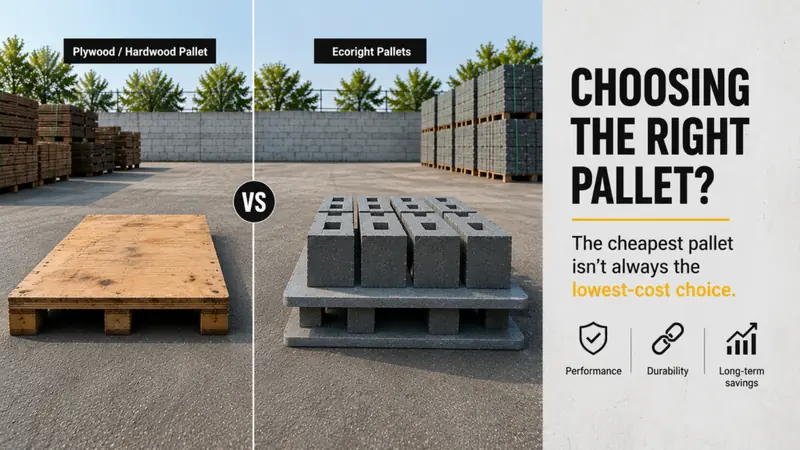
As the Government of India mandates the use of fly ash bricks near thermal power plants and encourages “Green Construction,” entrepreneurs are rushing to set up fly ash brick plants or increase the existing plants capacity.
But before rushing one must have complete knowledge about them, especially the pallets. Pallets might seem to be a small part of the fly ash brick production but in real it plays a major role and choosing the wrong pallet can lead to losses, higher costs and delayed productions.
To avoid all this hassle we have designed this guide with our 30+ years of expertise in this field. We regularly take feedback from our clients, understand their problems, and provide better solutions.
Now, one thing we’ve noticed again and again while working with manufacturers is this—most people don’t realize how much difference the type of pallet makes until they start facing issues in production.
At the start, everything looks fine. The machine runs, bricks come out, production seems normal. But after a few months, small problems start showing up—slight bending, uneven bricks, unexpected breakage, machine interruptions. And that’s when the real question comes up:
Was the pallet choice right?
So instead of comparing multiple materials and confusing things, let’s keep it simple and focus on what actually matters in real factories today:
Wooden Pallets vs EcoRight Polymer Pallets
1. Fly Ash Brick Pallet Materials: PVC & HDPE vs Wood — What Really Happens
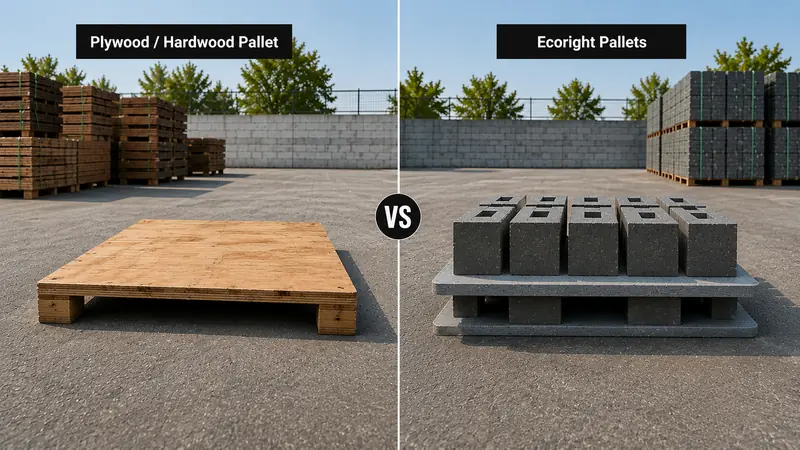
On paper, materials look perfect. But factories are not “on paper.” They are messy, wet, high-pressure environments where only practical performance matters.
Wooden Pallets (Plywood/Hardwood)
Wood has been used for years, and honestly, there’s a reason—it’s cheap and easily available. For someone starting a plant, it feels like a safe choice.
But here’s the part most people ignore.
A fly ash brick plant is not a dry place. There is constant:
- Water exposure
- Slurry contact
- High humidity curing
- Continuous vibration
And wood, by nature, reacts to all of this.
At first, you won’t notice anything. But slowly:
- The pallet starts absorbing moisture
- Edges begin to swell
- Surface loses flatness
- Inner layers weaken
After some time, you’ll see the real issue—delamination. The layers start separating, and the pallet is no longer structurally stable.
And once this starts, it doesn’t stop. It only gets worse.
Typical life in real conditions: hardly 6–12 months.
EcoRight Polymer Pallets
Now compare that with EcoRight Fly ash brick Pallets.These are not just “plastic boards.” They are engineered for exactly this kind of environment.
They don’t absorb water. Not a little—zero absorption.
So no swelling, no warping, no internal damage.
Even after months or years in the curing yard, they remain exactly the same.
One interesting thing many plant owners notice is this—
even after heavy usage, when the pallet bends slightly under load, it comes back to its original shape.That’s what we call the memory effect.
This single property is what makes a massive difference in long-term performance.
Typical life: 10+ years without replacement.
2. How Your Fly Ash Brick Pallet Affects Vibration and Brick Compaction Strength
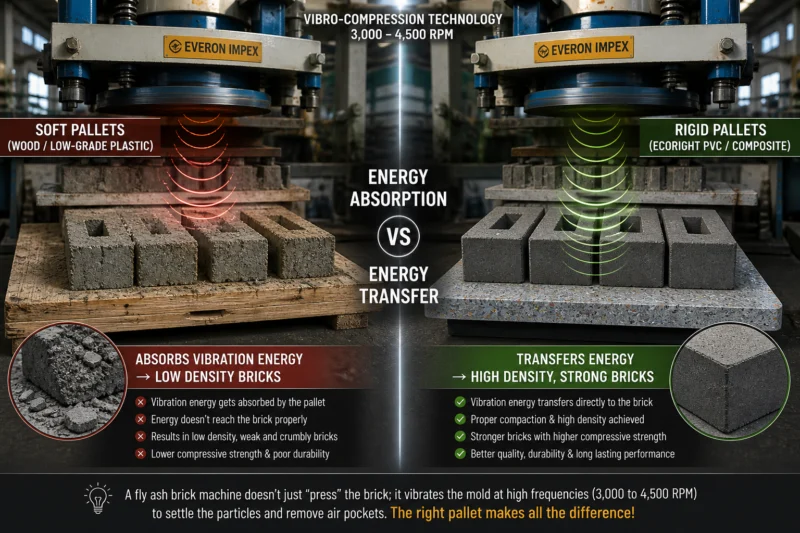
This is probably the most misunderstood part of brick manufacturing.A machine doesn’t just “press” bricks—it vibrates them at very high speed and the role of the pallet in this is critical.
Wooden Pallets: Silent Energy Loss
Wood is not rigid enough.
When vibration hits, instead of passing it fully to the mold, the pallet absorbs part of it.
It’s like placing a cushion under something you want to compact—it reduces effectiveness.
So what happens?
- Bricks don’t compact fully
- Air pockets remain
- Strength reduces
You might not notice immediately, but over time:
- Bricks feel weaker
- Breakage increases
- Customer complaints start
EcoRight Fly ash brick Pallets: Full Energy Transfer
EcoRight Fly ash brick Pallets behave completely differently.
They are rigid and stable, so vibration passes directly into the mold.
This leads to:
- Better particle bonding
- Higher density
- Stronger bricks
In real terms, many manufacturers see stronger, more consistent bricks just by changing pallets.
Same machine. Same raw material.
Just a different base—and the result changes.
3. Fly Ash Brick Pallet Cost: Wooden vs Plastic — Real Lifecycle Price Comparison
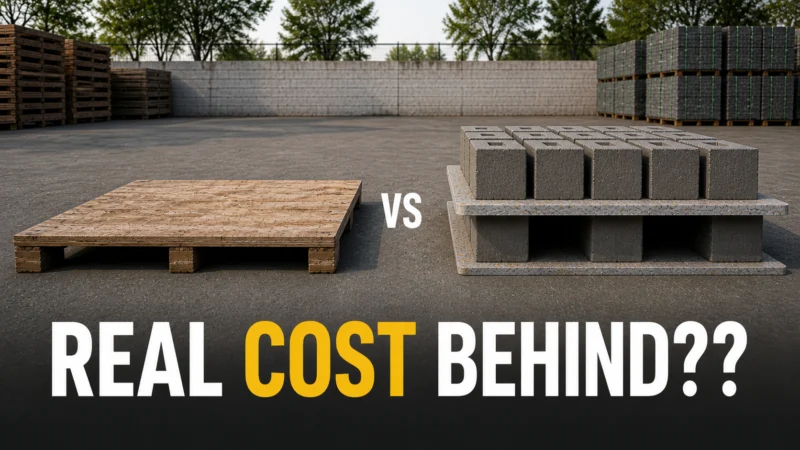
Almost every new manufacturer makes this mistake.
They ask:
“Whats the price?”
But the real question should be:
“What’s the real cost of a pallet?”
Wooden Pallets: Cheap Start, Expensive Journey
Yes, wood is cheaper upfront.
But then:
- Replacement every year
- Frequent breakage
- Handling damaged pallets
- Production interruptions
And the hidden cost nobody calculates:
rejected bricks
All of this adds up quietly.
By the time you calculate properly, you’ve spent far more than expected.
EcoRight Fly ash brick Pallets: One-Time Decision
Higher initial investment, no doubt.
But after that:
- No replacement
- Stable performance
- Minimal maintenance
Plus, at the end of life, there’s even recycling or buyback value.
So the real cost becomes much lower over time.
This is why experienced manufacturers don’t ask for price—they ask for lifecycle value.
Fly Ash Brick Pallet Comparison: Plastic vs Wood — Quick Reference
| Factor | Wooden Pallet | EcoRight PVC / HDPE Pallet |
|---|---|---|
| Lifespan | 6–12 months | 10+ years / 10,000+ cycles |
| Water resistance | Absorbs moisture, warps, delaminates | Zero absorption — stays flat always |
| Vibration transfer | Partial — absorbs energy, weaker bricks | Full — rigid, stronger bricks |
| Suitable for automatic machines | No — warping misaligns sensors | Yes — consistent flatness |
| Upfront cost | Low | Higher (one-time investment) |
| 5-year lifecycle cost | Very high (annual replacements + rejections) | Low — no replacement needed |
| Brick quality | Uneven height, rough finish, high rejection | Uniform, sharp edges, low rejection |
| CIPET certified | No | Yes (EcoRight by AS Polywood) |
| Eco-friendly | No — trees + high waste | Yes — made from recycled plastic, fully recyclable |
4. Best Fly Ash Brick Pallet for Automatic Brick Making Machines
If you are running or planning an automatic plant, pallet quality becomes even more critical. As wooden pallets have higher amount of flaws compared to Ecoright pvc/gmt pallets.
Wooden Pallets: Small Error, Big Problem
Even a slight bend in a wooden pallet can:
- Misalign sensors
- Cause feeding issues
- Jam the system
And when an automatic plant stops, it’s not a small issue—it directly hits production and profit.
EcoRight Fly ash brick Pallets: Consistency Matters
Since these pallets stay flat:
- Sensors work accurately
- Movement stays smooth
- No unexpected stoppages
In automation, consistency is everything.And that’s exactly what polymer pallets provide.
5. How Fly Ash Brick Pallets Directly Affect Brick Quality and Rejection Rate
If you are a Fly ash brick manufacturer you already knew low brick quality = rejection and more the rejection higher the cost and At the end of the day, your product is your reputation.
With Wooden Pallets
You’ll start seeing:
- Uneven height
- Broken edges
- Rough finish
This leads to rejection, especially in bigger projects where quality standards are strict.
With EcoRight Fly ash brick Pallets
You get:
- Uniform bricks
- Sharp edges
- Better surface finish
Which means:
- Higher acceptance
- Better market reputation
- More repeat orders
6. Fly Ash Brick Pallet Durability: How Long Do Plastic vs Wooden Pallets Last?
Durability is one of the factors which affects production cost. Let’s be practical—no one handles pallets carefully in real factories. They are dragged, loaded, exposed to sun, water, and chemicals.
Wooden Pallets
- Wear out quickly
- Crack under pressure
- Require constant replacement
EcoRight Fly ash brick Pallets
- Handle rough usage
- Resist chemicals
- Maintain structure over years
Basic care like keeping them clean and avoiding unnecessary sun exposure can extend life even further.
7. Eco-Friendly Fly Ash Brick Pallets: Recycled Plastic vs Wood
Earlier, this wasn’t a big concern. But now clients and regulations both care and as government has introduced new policies regarding recycling usage in industries it has become important part of production for many industries
Wooden Pallets
- Require cutting trees
- Short life = more waste
EcoRight Fly ash brick Pallets
- Made from recycled materials
- Fully recyclable again
- Support sustainable production
So you’re not just improving your plant—you’re aligning with future industry standards.
8. How the Right Fly Ash Brick Pallet Improves Production Efficiency
Sometimes the biggest gains are not visible directly.Means pallets also affects flow and efficiency of production.
Wooden Pallets
- Frequent interruptions
- Slower handling
- More labor effort
EcoRight Fly ash brick Pallets
- Smooth operations
- Faster cycles
- Less manual dependency
Over time, this improves total output significantly.
9. Real Factory Results After Switching to Plastic Fly Ash Brick Pallets
We’ve seen this pattern many times. A manufacturer starts with wooden pallets to save cost.But within months:
- Complaints begin
- Replacement starts
- Hidden losses appear
Then they reach us and switch to ecoright boards .
And after switching:
- Problems reduce
- Production stabilizes
- Profitability improves
The difference is not theoretical—it’s practical and visible.and almost all of them are our regular clients.
Frequently Asked Questions: Fly Ash Brick Pallets
Which is the best material for fly ash brick pallets — PVC, HDPE, or wood?
PVC composite is the best material for fly ash brick pallets. It offers the highest compressive strength (50+ N/mm²), best vibration rigidity, and longest life (10,000+ cycles). HDPE is a good mid-range option (2,000+ cycles). Wood is the worst choice — it warps, absorbs moisture, and causes inconsistent brick quality within 6–12 months.
How many cycles does a plastic fly ash brick pallet last?
A premium EcoRight PVC fly ash brick pallet lasts 10,000+ working cycles. Standard HDPE or recycled plastic variants deliver 2,000+ cycles. All plastic pallets outlast wooden pallets (300–500 cycles) by 5–30 times.
What sizes are available for fly ash brick pallets?
Standard fly ash brick pallet sizes include 600×600mm, 610×610mm, 560×850mm, 800×1200mm, and 900×450mm in thicknesses of 12mm, 18mm, 20mm, and 25mm. AS Polywood also manufactures custom sizes to match your machine specifications.
What is the price of fly ash brick pallets in India?
Fly ash brick pallet price depends on material, size, and thickness. Wooden pallets cost ₹150–400/piece but need annual replacement. EcoRight plastic pallets cost more upfront but deliver significantly lower cost per cycle over their 10+ year life. Contact AS Polywood at +91 9826906262 for current wholesale pricing.
Are fly ash brick pallets CIPET certified?
Yes. EcoRight fly ash brick pallets by AS Polywood Industries are tested by CIPET (Central Institute of Plastics Engineering & Technology), Bhopal — a Government of India accredited lab. Tests cover 11 parameters including tensile strength (8.4 N/mm²) and compressive strength (50.17 N/mm²). Also certified by Choksi Laboratories (NABL Accredited), Indore.
What is the difference between PVC and HDPE fly ash brick pallets?
PVC pallets have higher rigidity and compressive strength — ideal for fully automatic machines and heavy-duty use (10,000+ cycles). HDPE pallets are lighter, slightly flexible, and suitable for semi-automatic or manual plants (2,000+ cycles). Both far outperform wooden pallets.
Can I use the same fly ash brick pallet for manual and automatic brick machines?
Not always. Automatic machines require precise dimensional consistency — flat surface, uniform thickness — to prevent sensor misalignment. A 25mm PVC pallet from EcoRight works for both. Thinner or softer variants may work for manual/semi-automatic plants but risk problems in fully automatic lines.
Why are my fly ash bricks breaking — can the pallet be the cause?
Yes. A warped or soft pallet absorbs vibration instead of transmitting it fully to the mold. This leads to incomplete compaction, air pockets, reduced brick strength, and higher breakage.
What is the minimum order quantity for fly ash brick pallets?
Minimum order at AS Polywood Industries is 200 pallets for standard sizes. Bulk orders of 500+ pallets receive priority dispatch and better pricing. Call +91 9826906262 to discuss your requirement.
Where can I buy fly ash brick pallets in Indore and Madhya Pradesh?
AS Polywood Industries manufactures EcoRight fly ash brick pallets at 32-A, Sector C, Sanwer Road Industrial Area, Indore (M.P.) 452015. We supply directly to brick plants across MP, Rajasthan, Gujarat, UP, and all of India. Visit our fly ash brick pallet product page or call +91 9826906262.
10. Choosing the Right Fly Ash Brick Pallet: Expert Recommendation
A pallet may look like a small part of your plant setup, but in reality, it affects everything:
- Machine performance
- Brick strength
- Production speed
- Overall cost
Wooden pallets might feel like a safe starting point, but they come with limitations that show up sooner or later.
EcoRight Fly ash brick Pallets, on the other hand, are built for long-term thinking.
And in this industry, long-term thinking is what separates struggling plants from profitable ones.
Need Recycled Plastic Products?
Contact us for pricing, custom sizes, and bulk orders. Fast delivery across India.