Recycled Plastic Pallets for Fly Ash Brick Plants: Cost, Cycles & Machine Fit (2026)
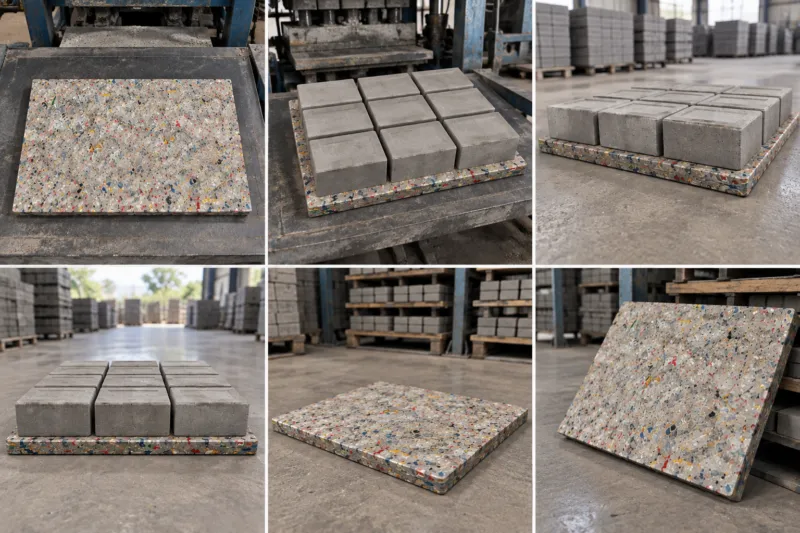
Fly ash brick manufacturers spend heavily in high capacity machines, raw material mixer and automatic stackers. However there is one critical component which most brick manufacturers ignore — “Pallets”. To save a little upfront cost most brick manufacturers choose plywood pallets, which get expensive as the time goes on. Pallets serve as the main operational product which goes through all stages moulding, water curing, drying, stacking and transportation.
Using the wrong pallet type may lead to uneven surfaces, broken bricks, machine sensor jams, and recurring replacement expenses.
While traditional marine plywood and wooden pallets were once the standard, modern manufacturers are rapidly transitioning to Recycled Plastic Pallets (PVC and Polymer Composites). This blog explores why recycled plastic pallets are the definitive choice for fly ash brick plants seeking maximum durability, higher brick quality, and long-term cost reduction.
The Hidden Cost of Traditional Wooden & Plywood Pallets
Most brick plant owners start with plywood or hardwood pallets due to lower upfront purchasing costs. However, fly ash brick production exposes pallets to continuous moisture, heavy hydraulic pressure, high-frequency vibration, and alkaline chemical reactions.
Key Problems with Wooden Pallets:
- Water Absorption & Swelling: Exposure during mixing and water curing causes wood to absorb water, leading to swelling, rotting, and warping.
- Delamination & Splitting: Continuous moisture destroys internal adhesive layers, causing plywood to peel apart within 6 to 12 months.
- Energy Loss During Vibration: Soft wood absorbs machine vibration rather than transferring it to the brick mix, resulting in lower brick density, air pockets, and structural weakness.
- Short Lifespan: Plywood pallets typically survive very few working cycles, requiring frequent and costly replacements.
- High Rejection Rates: Warped pallet surfaces create uneven bricks with chipped edges, increasing product rejection rates.
Key Advantages of Recycled Plastic Pallets
Recycled plastic pallets — engineered from high-density polymers and PVC composites — are built specifically to withstand harsh industrial environments.
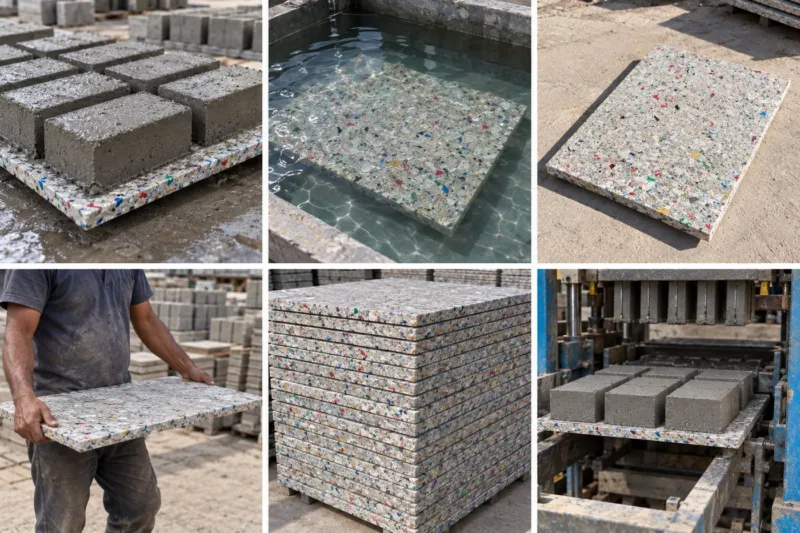
1. Waterproof and Moisture-Resistant
Recycled plastic pallets have a lab-tested water absorption of just 2.76% (ASTM D570). Even after months of continuous water curing or humidity exposure, they maintain exact dimensions without swelling, rotting, or flexing.
2. Exceptional Working Lifespan (10,000+ Cycles)
While wooden pallets fail within months, high-grade PVC composite pallets last 10,000+ working cycles (10+ years) and HDPE or recycled plastic variants 2,000+ cycles, with zero maintenance.
3. Vibration Memory & Superior Brick Strength
Recycled polymer pallets possess rigid structural integrity and a “memory effect.” During high-frequency vibration, they transfer the vibration energy directly into the brick mould. This creates denser, stronger fly ash bricks.
4. Smooth Surface and Dimensional Precision
Manufactured with equal thickness in all corners, recycled plastic pallets provide a satin-smooth finish and rounded edges. Bricks demould cleanly without corner chipping, resulting in sharp, uniform bricks that meet strict construction standards.
5. Chemical and UV Resistance
Fly ash contains alkaline compounds that corrode metal and rot organic materials. Recycled plastic pallets are chemically inert and UV-protected, making them resistant to outdoor sunlight and harsh chemical slurry.
Material Comparison: Wooden vs. Recycled Plastic Pallets
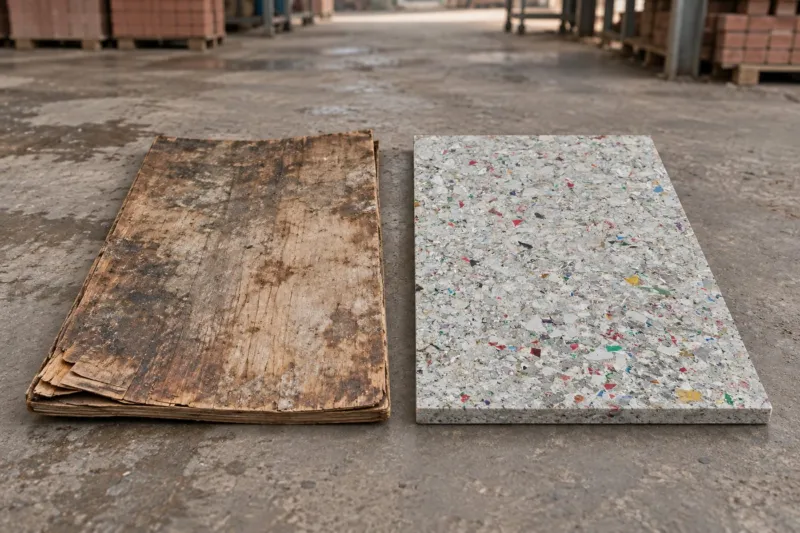
| Feature / Factor | Traditional Wooden / Plywood Pallet | Recycled Plastic (PVC/Polymer) Pallet |
|---|---|---|
| Average Lifespan | 6 to 12 months | 10+ years |
| Water Absorption | High (swells, rots, warps) | 2.76% (ASTM D570, lab-tested) |
| Vibration Energy Transfer | Poor (absorbs vibration) | Excellent (full energy transfer) |
| Brick Quality Impact | Risk of uneven surfaces & cracks | Uniform height, sharp corners, higher density |
| Maintenance Need | High (frequent repairs & replacements) | Zero maintenance |
| Buyback / Scrap Value | Zero (broken wood is waste) | Recyclable buyback value |
| Environmental Impact | Causes deforestation | Keeps plastic waste out of landfills |
Financial Analysis: Cost per Cycle vs. Initial Purchase Price
Choosing brick pallets only by seeing upfront cost is a common trap. A true financial evaluation compares Cost per Cycle over a 5 to 10-year period. See the current fly ash brick pallet price list for per-piece rates at ₹70 per sq ft.
- Plywood Pallets: Low initial price. Because they fail every 6–12 months, at about ₹150 per plywood pallet replaced once a year, a factory needing 1,000 pallets may spend a hefty amount of ₹15,00,000+ over 10 years in replacement costs, lost labor, and broken brick wastage.
- Recycled Plastic Pallets: Medium initial investment. Requires a single setup cost of pallets, with zero replacement costs over 10 years, including the end-of-life buyback/recycling value — which costs much lower than plywood pallets.
Total Savings: Switching to recycled plastic pallets can save up to ₹12,00,000+ per 1,000 pallets of 600×600 mm over 10 years, directly boosting bottom-line profits.
Compatibility Across Machine Types
Different manufacturers use different types of machines, some operate manually while some have fully automated setups. So different types of machine require different thickness and sometimes different materials depending on the machine type.
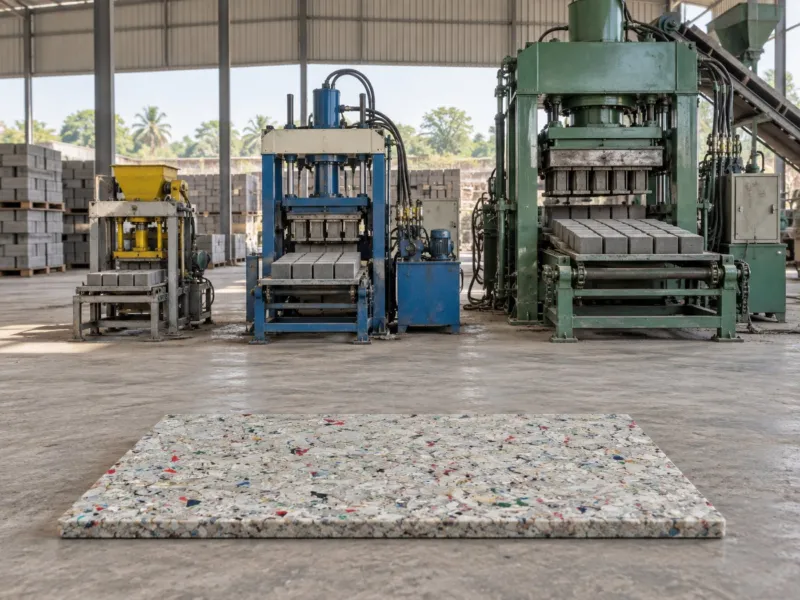
- Manual / Egg-Layer Machines: 12mm thickness (Lightweight & durable)
- Semi-Automatic Machines: 18mm – 20mm thickness (Handles vibration & shock)
- Fully Automatic Hydraulic Vibro-Press Plants: 25mm thickness (Ensures perfect sensor alignment without jamming)
Environmental Sustainability & Circular Economy
As the government comes with new policies, industries are also adopting eco-friendly manufacturing practices, recycled plastic pallets offer compelling sustainability advantages:
- Diverts Plastic Waste: Each pallet repurposes post-industrial and post-consumer plastic waste, keeping tons of plastic out of landfills and oceans.
- Prevents Deforestation: Eliminating wooden pallets saves trees at every manufacturing unit.
- 100% Recyclable: At the end of their multi-year lifecycle, pallets can be reground and remolded into new industrial products.
Best Practices to Extend Pallet Lifespan
To maximize pallet operational cycles, manufacturers can follow some of the best practices to extend the lifespan of the product:
- Keep Surfaces Clean: Regularly clean off wet slurry or concrete dust build-up.
- Align Sensor Feeders: Ensure automatic machine sensors and robotic arms are calibrated to avoid mechanical jams.
- Cover Idle Pallets: Store unused pallets under covered sheds during severe summer heat.
Conclusion
A pallet is not merely an expense item — it is a critical investment in production efficiency, brick quality, and business profitability.
By switching from traditional wood to Recycled Plastic Pallets, fly ash brick manufacturers eliminate recurring replacement costs, reduce brick rejection rates, optimize machine performance, and contribute to sustainable construction. Upgrade your plant today to build stronger bricks and maximize long-term ROI.
Need Recycled Plastic Products?
Contact us for pricing, custom sizes, and bulk orders. Fast delivery across India.