Does Uniform Pallet Thickness Really Affect Fly Ash Brick Production?
Most brick makers check the size of a pallet and how thick it is. Very few check whether it is the same thickness everywhere. But a pallet that is a little thicker at one corner, or a set of pallets where each one is slightly different, shows up directly in your bricks.
This blog explains how uneven pallet thickness affects fly ash brick production, why pallets lose their even thickness, and how you can check your own pallets in a few minutes.
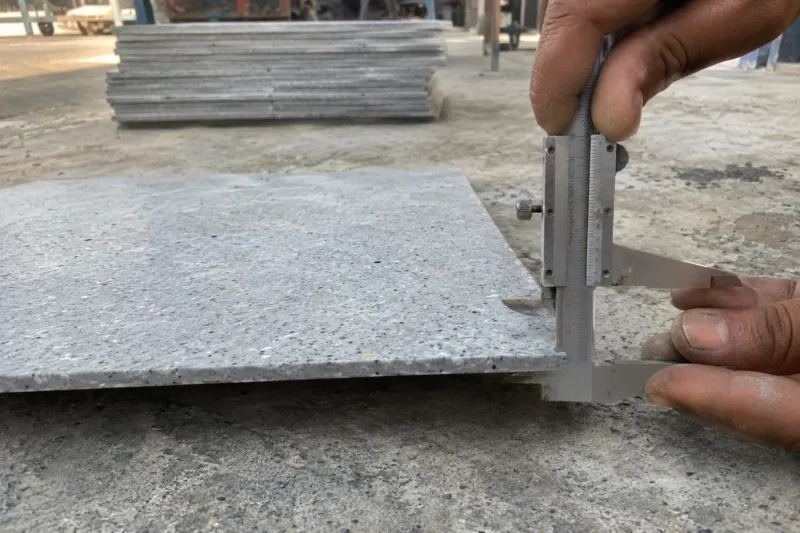
Why the Pallet Matters So Much
In a fly ash brick machine, the pallet sits under the mould and works as its floor. The mix is filled and pressed on top of it, and the fresh bricks leave the machine sitting on it. So the top of the pallet is the starting point for every brick.
If the pallet is thicker, the brick on it comes out shorter. If it is thinner, the brick comes out taller. If one side is thicker than the other, the bricks on that side come out different, or a brick may come out with a sloping top. Big automatic plants have sensors to correct this. Most fly ash brick machines do not, so whatever the pallet does, the brick follows.
Even thickness means three things:
- Across one pallet: the same thickness at all four corners and in the middle.
- Across the whole set: every pallet on the machine is the same thickness as the others.
- Over time: the pallet keeps that thickness after months of water, vibration and pressing.
How thick your pallet should be is a different question. We cover that in fly ash brick weight vs pallet strength.
What Uneven Thickness Does to Your Bricks
1. Bricks come out in different heights
This is the first thing you notice. Bricks from one pallet are taller than bricks from another, or one end of a brick is higher than the other. The Indian standard for fly ash bricks, IS 12894, allows only about 2 mm of difference per brick on average for a 70 mm high brick. A pallet that is off by a millimetre or two uses up most of that.
2. Compaction is not even
Pressing and vibration work properly only when the pallet sits flat and firm under the mould. If the pallet is thicker at one end or rocks on the table, the force does not reach the whole mix equally. One part of the brick gets packed well and another part does not. That means uneven strength in the same batch.
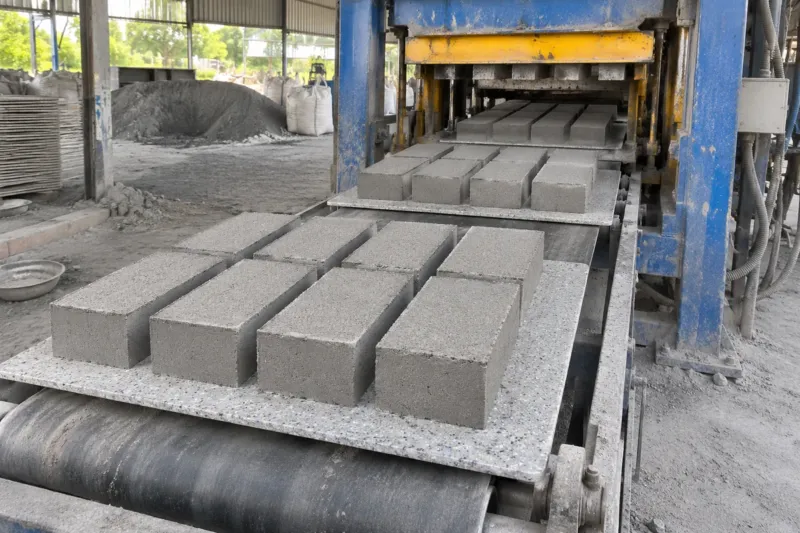
3. Fresh bricks break in handling
A pallet that is not flat rocks when it is put down on the floor or on a stack. Fresh fly ash bricks are soft. When the pallet under them moves, corners break and cracks start. A flat pallet sits still and keeps the bricks safe until they set.
4. The buyer notices
Masons need more mortar to level a wall made of bricks with mixed heights, and the bricks simply look poorer. Even size is one of the main reasons buyers pick fly ash bricks over red bricks, as we explain in fly ash bricks vs red bricks vs AAC blocks.
Why Pallets Lose Their Even Thickness
- Water: wood and plywood soak up water in the curing yard, swell and bend. They rarely swell evenly, so one part becomes thicker than another. Read why waterproof pallets matter in fly ash brick production.
- Wear: the area under the mould is pressed in every cycle. Soft material wears thinner there than at the edges.
- Bending: a pallet that is too weak for the load bends while lifting and stacking and does not come back fully flat.
- Mixed sets: pallets bought at different times or from different suppliers are rarely exactly the same thickness, even when the size on paper is the same.
How to Check Your Pallets
You need a vernier caliper and ten minutes.
- Measure five points. Measure the thickness at the four corners and in the middle of a pallet. The gap between the highest and lowest reading tells you how even it is.
- Check if it rocks. Put the pallet on a flat floor and press each corner. If it rocks, it has bent.
- Compare the set. Pick 10 pallets from the machine and measure the middle of each. If the readings are far apart, your brick heights will be too.
- Check old pallets again. Measure pallets that have been in use for a few months, especially after the monsoon. Swelling and wear show up here.
- Look at the bricks. Compare bricks made on different pallets. If the height changes from pallet to pallet, the pallets are the likely cause.
When you buy new pallets, ask the supplier for the thickness tolerance in writing, and measure a sample at five points before you place the full order. Make sure the whole set is made to the same specification.
EcoRight Fly Ash Brick Pallets
EcoRight fly ash brick pallets from AS Polywood Industries are made from composite PVC, HDPE and recycled plastic. They are waterproof, with water absorption of 2.76% (ASTM D570), so they do not swell in the curing yard. Our PVC fly ash brick pallets are rated for 10,000+ working cycles. Share your machine model or pallet size, and we will provide a sample you can measure yourself, with a quote within 48 hours. See EcoRight fly ash brick pallets.
Conclusion
Yes, uniform thickness really does affect fly ash brick production. The pallet is the floor of the mould, so any change in its thickness becomes a change in your brick. Uneven pallets give bricks of mixed height, uneven strength and more breakage. Check your pallets regularly, replace the ones that have bent or worn, and buy waterproof pallets made to one specification.
Frequently Asked Questions
Does pallet thickness affect fly ash brick height?
Yes. The pallet works as the floor of the mould, so on most fly ash brick machines a thicker pallet gives a shorter brick and a thinner pallet gives a taller one.
Why are my fly ash bricks coming out in different heights?
Common causes are pallets of different thickness, bent or swollen pallets, worn pallets and uneven filling of the mould. Measure your pallets and compare bricks from different pallets to find the cause.
How do I check if a pallet is flat?
Put it on a flat floor and press each corner. If it rocks, it is bent. Also measure the thickness at the four corners and in the middle with a vernier caliper.
Which pallet keeps its thickness best?
A waterproof pallet that does not swell, such as plastic or PVC composite, keeps its thickness much better in a wet curing yard than wood or plywood.
Get in Touch: EcoRight Pallets Manufactured by AS Polywood Industries
- Company: AS Polywood Industries (EcoRight Brand)
- Address: 32-A, Sector C, Sanwer Road Industrial Area, Indore (M.P.) 452015
- Phone / WhatsApp: +91 98269 06262
- Product Page: EcoRight Fly Ash Brick Pallets
Need Recycled Plastic Products?
Contact us for pricing, custom sizes, and bulk orders. Fast delivery across India.