Why Waterproof Pallets Matter in Fly Ash Brick Production, and Which Pallet Is Best
A fly ash brick plant works with water all day. The mix goes into the machine damp, fresh bricks come out wet, and the yard is sprayed again and again during curing. The pallet sits under the brick through all of it. If the pallet takes up water, it changes shape, and the brick on it changes shape too.
This is why brick makers ask for waterproof pallets. This blog explains where a pallet meets water in a fly ash brick plant, what water does to wood, plywood, steel and plastic pallets, how that shows up in your bricks, and which pallet material is best when water is part of the daily routine.
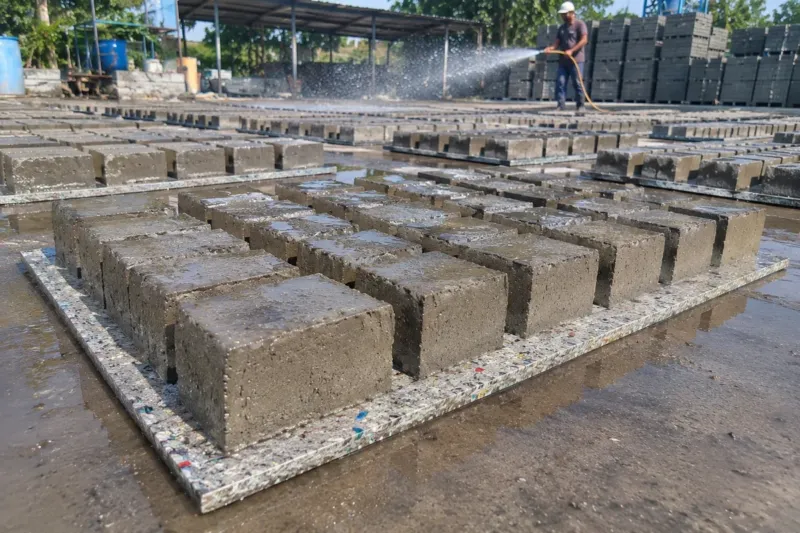
Where Pallets Meet Water in a Fly Ash Brick Plant
A pallet is wet for most of its working life. It meets water at four points:
- Damp mix: the raw mix (fly ash, binder, sand or stone dust and water) is pressed straight onto the pallet. The underside of every fresh brick is wet.
- The first days on the pallet: the Odisha State Pollution Control Board guidelines for fly ash bricks describe fresh bricks staying on pallets for about two days before they are moved for water curing.
- Water curing: the same guidelines give 10 to 14 days of water curing. In many plants the bricks are sprayed while still on or near the pallets, so the pallets get wet every day.
- Weather and washing: pallets lie in open yards through the monsoon and are washed to remove stuck mix.
A pallet in a busy plant goes through this cycle again and again. Any pallet that absorbs water will swell and dry, swell and dry, for its whole life.
What Water Does to Each Pallet Material
1. Wooden Pallets
Wood takes up water and changes size with it. The Wood Handbook of the US Forest Products Laboratory explains that wood swells as it gains moisture and shrinks as it dries, up to its fibre saturation point (around 28% moisture on average). The change is not equal in all directions. On average, wood moves about 4% across the growth rings and about 8% along them, between green and fully dry.
Unequal movement is what bends a board. The wet face swells more than the dry face and the pallet bows, twists or cups. In a brick plant, the top face is wetted by the mix and curing water while the bottom face sits on dry or wet ground, so the two faces rarely have the same moisture. Wood that stays wet also rots and attracts fungus and termites.
2. Plywood Pallets
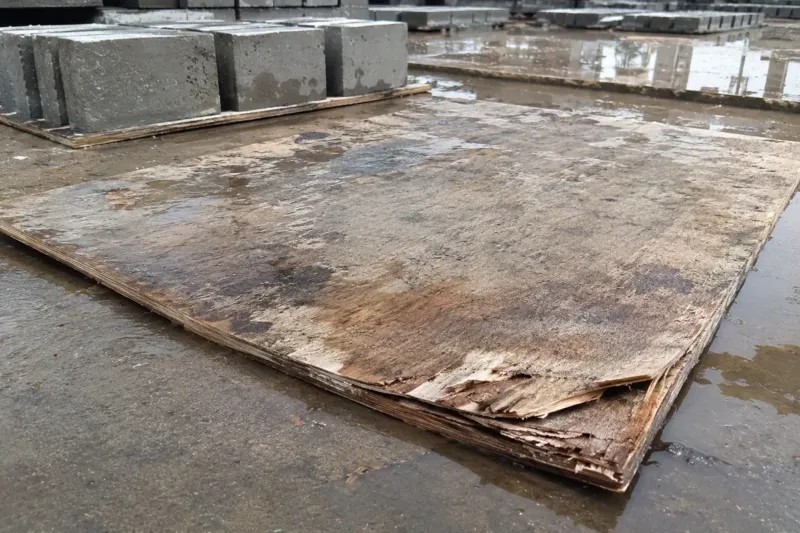
Plywood is made of thin wood veneers glued together, so water attacks it in two ways: the wood swells, and the glue lines weaken. Indian plywood comes in grades for this reason. IS 303 covers general purpose plywood, and its MR (moisture resistant) grade is meant for moisture, not for daily soaking. Marine plywood under IS 710 uses waterproof glue and lasts longer in water.
Even with waterproof glue, the veneers are still wood. Water enters at cut edges, corners and screw holes, the edges swell, and the top layer starts to lift and peel. Once the face veneer breaks, the surface is rough and fresh bricks pick up that roughness on their base.
3. Steel Pallets
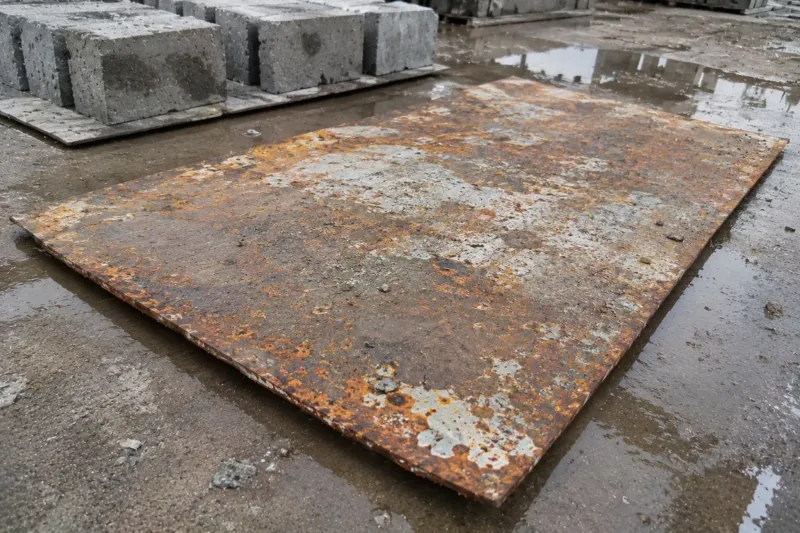
Steel does not absorb water, so it does not swell. Its problem is rust. Mild steel exposed to water and air corrodes unless it is coated, and a brick yard wets it every day. Rust roughens the surface, flakes off, and can stain the base of the bricks. Steel pallets are also heavy, which matters when workers lift and carry hundreds of pallets in a shift.
4. Plastic and PVC Composite Pallets
Plastic pallets made from PVC, HDPE or recycled plastic absorb very little water. They do not rot, rust or swell, so the top face stays flat whether it is wet or dry. This is the main reason brick makers choose plastic pallets over wood and plywood.
For example, EcoRight fly ash brick pallets were tested by CIPET: CSTS, Bhopal (Government of India). The water absorption result was 2.76% under ASTM D570, and the moisture content was 0.080% under ASTM D6980. The pallets are also termite and fungus free and UV resistant, so they can lie in an open yard.
How a Wet Pallet Shows Up in Your Bricks
A pallet that changes shape passes the problem straight to the brick. These are the defects plants most often trace back to the pallet:
- Uneven brick height: a bowed pallet does not sit flat under the mould, so one end of the brick comes out thicker than the other.
- Cracks and broken corners: a fresh brick is weak. When it sits on a bent surface, the load is uneven and corners crack during handling.
- Bricks sticking to the pallet: a rough, swollen or peeling surface grips the wet mix. Workers then pull the brick off and damage its base.
- Stains on the brick base: rust from steel and dark marks from rotting wood can transfer to the brick.
- Stoppage on the machine: a pallet that has lost its shape may not feed properly into a semi-automatic or automatic machine.
Each of these means more broken bricks, more rework and slower dispatch. The cost of a cheap pallet that absorbs water is paid in bricks, every day.
Pallet Materials Compared: Water Resistance
| Pallet Material | Takes Up Water? | What Water Does to It | Effect on Bricks |
|---|---|---|---|
| Solid wood | Yes | Swells, bows, rots; fungus and termites | Uneven height, cracks, sticking |
| MR grade plywood | Yes | Swells, glue lines weaken, layers peel | Rough base, sticking, cracks |
| Marine plywood (IS 710) | Less, but wood still absorbs at edges | Edges swell and peel over time | Lasts longer than MR, wears at edges |
| Mild steel | No | Rusts unless coated; heavy to handle | Rust stains, rough base |
| Plastic / PVC composite | Very little (EcoRight: 2.76%, ASTM D570) | No rot, no rust, stays flat | Flat, even bricks |
How to Check if a Pallet Is Really Waterproof
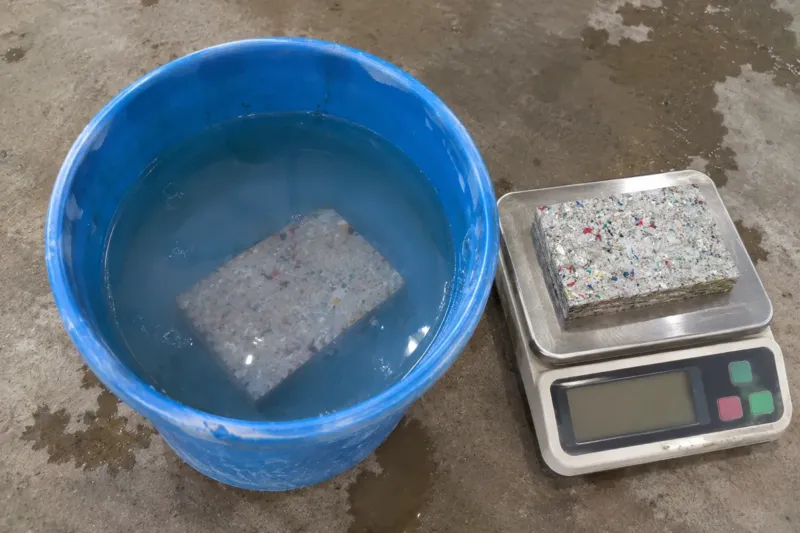
Many suppliers call their pallets waterproof. You can check this yourself with a simple test based on the same idea as ASTM D570:
- Cut a small piece from a sample pallet, or ask the supplier for one.
- Dry it and weigh it. Note the dry weight.
- Keep it fully under water for 24 hours.
- Take it out, wipe the surface water with a cloth and weigh it again.
- Water absorption (%) = (wet weight − dry weight) ÷ dry weight × 100.
Example: a piece weighs 500 g dry and 513.8 g after soaking. It took up 13.8 g of water. 13.8 ÷ 500 × 100 = 2.76%. Do the same test on a piece of wood or plywood pallet and compare the two numbers.
Also ask the supplier for a lab test report from a recognised laboratory. A water absorption number with a test method (such as ASTM D570) is more useful than the word “waterproof” on a brochure.
Which Pallet Is Best for Fly Ash Brick Production?
For a plant where pallets are wetted every day, a plastic or PVC composite pallet is the best choice. It does not swell, rot or rust, so the brick base stays flat from the first cycle to the last. EcoRight fly ash brick pallets are rated for 10,000+ working cycles (HD pallets 2,000+), against 300–500 cycles for wooden pallets.
Being waterproof is the first test. After that, the right pallet also depends on your machine, brick load and thickness:
- For how much load each pallet carries and the right thickness, read Fly Ash Brick Weight vs Pallet Strength.
- For machine fit and how to compare suppliers, read How to Choose the Right Fly Ash Brick Pallets.
- For cost per cycle of plastic pallets, read Recycled Plastic Pallets for Fly Ash Brick Plants.
Conclusion
Water is part of every stage of fly ash brick production, from the damp mix to 10–14 days of curing. A pallet that absorbs water swells, bends, peels or rusts, and the bricks on it come out uneven, cracked or stained. A waterproof pallet keeps a flat base cycle after cycle. Before you buy, test a sample in water and ask for a lab report with the water absorption result.
Frequently Asked Questions
Why should fly ash brick pallets be waterproof?
Pallets carry wet bricks and are sprayed during curing. A pallet that absorbs water swells and bends, which gives uneven, cracked bricks. A waterproof pallet stays flat.
Are wooden pallets good for fly ash bricks?
Wooden pallets are cheap to buy, but wood absorbs water, swells, bows and rots. They last 300–500 cycles, much less than plastic pallets.
Is marine plywood waterproof enough for brick pallets?
Marine plywood (IS 710) uses waterproof glue and lasts longer than MR grade plywood. The veneers are still wood, so edges and screw holes take up water and swell over time.
What is the water absorption of plastic brick pallets?
It depends on the material and the maker. EcoRight fly ash brick pallets tested 2.76% water absorption under ASTM D570 at CIPET: CSTS, Bhopal.
How can I test if a pallet is waterproof?
Weigh a dry piece, soak it in water for 24 hours, wipe it and weigh again. Water absorption (%) = (wet weight − dry weight) ÷ dry weight × 100.
Which pallet is best for fly ash brick production?
For daily wet use, a plastic or PVC composite pallet is the best choice because it does not swell, rot or rust. Choose the size and thickness to match your machine and brick load.
Get in Touch: EcoRight Pallets Manufactured by AS Polywood Industries
- Company: AS Polywood Industries (EcoRight Brand)
- Address: 32-A, Sector C, Sanwer Road Industrial Area, Indore (M.P.) 452015
- Phone / WhatsApp: +91 98269 06262
- Product Page: EcoRight Fly Ash Brick Pallets
Need Recycled Plastic Products?
Contact us for pricing, custom sizes, and bulk orders. Fast delivery across India.